Friday, November 19, 2010

Richard Maize: Which Finance Programs Are Good For Buying A Home, Real Estate?

Richard Maize: Which Finance Programs are Good for Buying a Home, Real Estate?


Richard Maize, one of the world's most successful and respected businessmen, shares his secrets for success with regard to which finance programs are best for purchasing a home. Maize, who was the leading mortgage banker in the US, now donates much of his time and efforts as a mentor to young entrepreneurs.

Richard Maize
Quote startWe will bottom out eventually in the real estate market but with these new and improved guidelines we will witness a solid foundation for eventual improvement in the markets.Quote end
Los Angeles, CA  November 22, 2010
Responding to recent news which highlights the attractiveness of FHA real estate loans and that home ownership may now be falling out of reach for more Americans as banks toughen their restrictions for Federal Housing Administration-insured loans, Richard Maize, the former leading mortgage broker in the US, provides some solutions for home owners.
"Mortgage lenders including Wells Fargo & Co. and Bank of America Corp., the two largest mortgage banks, have now raised the minimum credit score on FHA-insured loans that they will buy to 640 from 620," says Richard Maize.
"About 6.3 million people fall within that range, according to FICO, which created the formula for the ratings, says Maize. "But home owners can still find FHA or Federal Housing Administration loans which will only require a down payment of only 3.5 percent compared with the much larger upfront investments many banks require."
Richard Maize states for those asking: "I am a homeowner and I see many choices of finance programs available. What do I choose? They all look so inviting. But how do I now overcome raised the minimum credit scores?" that there are still some very positive options from which a home owner can still chose from.
"As soon as the mortgage market really loosened their requirements during the last decade, almost everyone was capable of purchasing a home due to the liberal underwriting requirements," says Richard Maize.
"No income verifications, medium credit score requirements and little money in the bank. Even at times, over 100 percent financing. As far the FHA loans are concerned, the minimum requirements were often looser. This creates a superficial boom in the real estate world. As the market continues to grow and expand because of liberal lending, if one can't make their payments as agreed, they can simply refinance and get enough cash out of the loan to pay the next year or two payments."
Maize adds: "Or of course, they can simply sell the house to the next guy and usually enjoy a nice profit. In one of these examples, lender gets their payments, or in a sale, their money returned; and the borrower goes on with free payments for awhile by way of financed money for that purpose or they enjoy a gain from the sell."
Maize says that in this example, a tragedy is waiting to happen. Markets don't and can't go up forever. If a loan is going to be made by a government body or an institution, its not that bad of an idea to have a qualified borrower by way of credit and income stream (of course there can be some rare exceptions to that rule such as a very large cash reserve or upcoming employment contract etc.) and some reserve.
These banks were loaning money to almost anyone with a pulse at very aggressive interest rates.
"As soon as something global happens to the real estate market (such as the sub-prime meltdown), then the house of cards starts and doesn't stop falling. Banks, and borrowers that really don't qualify for a loan, get their respective heads handed to them with a domino effect that will take a long time to unfold. Bottom line, I am in agreement with the new structure for lenders and government bodies to qualify a lender to make a loan to them. We will bottom out eventually in the real estate market and with these new and improved guidelines will make a solid foundation for eventual improvement in the markets. I can't say I agree with the extreme and quick swing in their approach, but these industries always react fast on a downturn out of fear."
Maize states that the extreme and quick swing pertains to the switch in underwriting guidelines . More than 50% of the loan applications were submitted and approved on either a "stated income" or "no documentation" at all. The banks gave up to 105 % of the purchase price on conforming loans and up to 100% loans up to 1 million. They shut these programs off quickly.
"In today's low interest rate environment, from the least financial sophisticated to the Ivy League Ph.d in finance, the question always seems to come up as to what loan program is best," says Maize.
"We are in a very low interest rate environment (even with the recent spikes in the treasuries). As of recent weeks, there are inflation fears that if the fears are correct, will ultimately lead to higher rates. Maybe this is a good time to lock a very long fixed rate loan; or is it? These attractive adjustables that are less than 1.5% are difficult to pass up or is it just for such a short time, you are fooling yourself? Perhaps. Let's answer some questions about the subject."
Richard Maize raises several questions asked by homeowners that are now being heard throughout the real estate industry.
"I recently purchased a home that will likely be for less than 5 years before we relocate again as my wife is pregnant with our second child and we will outgrow this home by the time this child starts school. I was offered a 5 year fixed for 3.75% yet a 3 month libor (whatever libor is) at about 1.5%. Before you answer this, please know that my new job contract will allow certain wage increases starting year 2 in my job. The first year's compensation package, although will net me enough to pay the 5 year fixed rate and my bills, it will be a slight strain without any chance for savings for me and my family. What do I do. I don't want to act foolishly by accepting the very low interest rate and have this rate race up by the end of the loan's first anniversary. Ok, what do I do?"
Richard Maize: "Lots of good information. The first question you need to ask your loan consultant is what is the rate cap on the adjustable loan program?"
"If it is 5% which means it cannot exceed a maximum of 6.5% over the lifetime of the loan, that is good to know. Also, is there a cap for the annual increase (many of these loans have a 2% yearly maximum cap). If my premise is correct, then we need to do simple math to see what is best for you. We also have to take a likely premise as to what could happen subject to error; but, we have to start somewhere on this for you. Let's assume you take the 1.5% 3 month libor (this, by the way is a relatively new American index that is "London Inter-Bank Offered Rate." It is based on rates that contributor banks in London offer each other for inter-bank deposits.) And let's also assume that the libor rates increase by 1.25% the first year and the same year two and flat for year three."
Richard Maize continues: "After three years, your rate would now be 4% with an average around 2.75%. So far, taking the short term loan is better. Then, in year four it goes up again by 1.25%. After 4 years, your average is 3.375%. (This equation will be easier if you can get the 1 year libor as your basis which is often offered along with the shorter term libor that are being offered to you). Anyway, as you can see, if you truly believe your stay is less than 5 years and you have safeguards (maximums increases), then the short term loan might be your best alternative."
"In your circumstance, even if inflation is ramped and the rates spike higher than our example, your increase in wages will offset this along with more interest rate write off with this interest could be a good offset. Lastly, if there are no caps available on these programs for you, then you need to lock in the 5 year fixed as the adjustable would be way too risky."
"Building up equity through a loan has no basis in deciding what loan to take. The first 10 years of a loan is primarily directed to interest. It is the last 7 to 9 years of a 30 year loan that has the larger build up. Any equity one may build is by and large from any appreciation in the real estate during the holding period."
"When is it the right time to pay a point or points for a loan rather than simply get a loan with no points?"
Richard Maize: "This is a very good question. If you are going to lock in a long term loan (over 10 year fixed) and you believe that the rates are low (currently, historic lows), then it is time to pay a point. Let me back up; when you pay origination point(s), it has a direct impact on the rate you are paying. Lets say for example, a 30 year fixed rate is 5% (not quoting, just as an example) with no points. the same loan with say 1 point could be 4.75%."
"Now, if rates go lower and you already paid a point, you guessed wrong. In this environment, if you are going to lock into a long term fixed loan, I would suggest paying a point (which you could add on to the principle of the loan). while enjoying the low rate, you have now bought it down to a lower rate. If this is a purchase money loan, the point is deductable (up to 1 million dollar loan amount) which makes paying the point even more attractive."
"Is there any time to take out a "hard money" loan where I would be paying 3 to 5 points and 10 to 14% interest?"
Richard Maize: "In these times where is such scrutiny to the lending field, a loan of such high rate and cost as a consumer loan (personal in nature) could be usurious unless you can convince the lender that this is a commercial loan using your residence as collateral. I missed your question; the answer is generally not a good idea. Here is where that loan could come into play: you have an opportunity to buy say an apartment building for far less than market value due to the necessity of the seller or it being a bank owned property. One of the requirements is that you close very quickly."
"You can't get a conventional loan as quickly as you need to close and the deal in your opinion is amazing. figure the costs of this loan as part of the purchase price and see if it is still a great deal. Most likely if it was a great deal before, the cost of this "hard money" loan won't change the numbers that dramatically providing you diligently refinance them out conventionally. the key to this scenario is that you don't let the lender add a prepayment penalty clause in the note.""On other side of the coin. If, the lender can figure out how to loan on a consumer basis using your home as collateral, generally the answer is run for the hills and whatever short fix this expensive loan will do for you, is just that. A short term fix. You are better off trying to deal with the current lender if it a problem with you current mortgage. Borrowing at a high rate to get money that you intend to pay back, is a very desperate proposition."
"What will a rate increase do to the real estate market both in residential and commercial?"
Richard Maize: "Rate typically have an inverse reaction to the value of real estate. When rates go up, those borrowers with the same income can buy a less pricey property because of the increase in mortgage cost. For example, if you can spend $5,000 per month on your payment and say that represents a $900,000 mortgage. If the rates went up that same $5,000 monthly payment could possible represent a $840,000 mortgage. If that scenario continues then the mortgage that be afforded will be continue to be reduced. The same goes for income property. The same income will represent a lower cash flow with a higher interest rate."
Maize concludes: "In both examples, the downward pressure prevails on the value/sales price to keep the demand constant."
Richard, who communicates both off and online with recent college graduates, established the Rochelle and Richard Maize Foundation - a philanthropic organization that supports, contributes volunteer and financial resources to causes locally in the LA community and worldwide supporting programs focusing on art, culture, sports, family services and health care that work to help people live more fulfilling lives.
Richard Maize has generously supported a variety of organizations and causes including the American Cancer Society, Vista Del Mar Child and Family Services, Hurricane Katrina, Los Angeles Police Foundation, the Beverly Hills Police and Fire Department, the Cedars Sinai Board of Governors, Israel Flying Aid in earthquake devastated Haiti and the Maccabiah Sports Games in Israel.
Richard Maize and his wife, Rochelle Maize, are longtime benefactors of many other non-profit local organizations in LA and globally where Richard has been recognized for his humanitarian efforts on behalf of dozens of charitable groups and community projects.

Sunday, November 14, 2010

Richard Maize: Important To Support Beverly Hills Police, Fire Department

Richard Maize, a native of Los Angeles, California, is a respected philanthropist and supporter of the poor and hungry throughout the world. But Richard Maize is also well known for supporting local humanitarian and charity organizations in his hometown of Los Angeles with the life saving Beverly Hills Police and Fire Departments leading his list of contributions and support.


"I am one of the fortunate Beverly Hills residents who have the finest and most reactive services of  both the Beverly Hills Police Department and that of the Beverly Hills Fire Department.   Beyond many other advantages for living in the area such as the schools and the overall neighborhoods, the police and fire department is a reason by itself to live in this fine community," says Richard Maize, the directs the Rochelle and Richard Maize Foundation. 
"Our family had the unpleasant situation of having an intruder in our backyard and my then 10 year old daughter went in the backyard only to be faced with a large trespasser," says Maize.  

"She ran inside and told her mother in which she quickly locked the back doors and called the Beverly Hills Police.  Within 120 seconds, six police were at our house from all sides circling the home and surrounded the intruder.  It turned out that in this case my wife and daughter were really not in harms way because this large man was simply a homeless man that lost his way and came into our house through the alley's gate to our home in which the gardener left unlocked.  However, the quick, rapid and effective response, the professional manner for how the Beverly Hills Police handled themselves speaks volumes."

Maize adds:  "I hear many stories of the great police department we have in our community.  Other less fortunate areas are often waiting over 20 minutes for local police to respond to emergencies." 
"As far as the Beverly Hills Fire Department goes; they have also are respected for maintaining high marks for their efficient manner.  They are just among the greatest in the US.  In both situations and that Beverly Hills is a small town, recognizing the bravery and effectiveness of these professionals is not uncommon as many express their gradiuate with a simple wave and a sincere smile that makes the residence feel even more comfortable." 
"A very good friend of ours who is and was in great physical condition had a massive heart attack," says Richard Maize. "The paramedics arrived in just minutes to bring my friend back to life not once but 5 or 6 times before reaching the hospital." 
Maize adds: "There is a policeman and fireman's ball once a year in Beverly Hills to not only recognize the wonderful job these men and women do for our community, but also to raise money for their causes. I for one, although have attended most of these events during my tenure in the Beverly Hills area, need to contribute more to them."  

Richard Maize concludes: "As I state this, I reflect on their value to me and my family. I realize how lucky we are and that perhaps we should never, ever take their 24 / 7 efforts for granted."

The Beverly Hills Police Department is responsible for safeguarding the lives and property of City residents. The department is a leader in early response times and its dedicated officers work with the community to keep neighborhoods problem-free. The BHPD values its reputation as an agency that earns the public trust through efficient, impartial police service.


The Rochelle and Richard Maize Foundation is a philanthropic organization that supports and contributes volunteer and financial resources to causes locally in the community and worldwide by supporting meaningful programs focusing on art,
culture, family services and health care that work to help people live more fulfilling lives.

Richard Maize has generously supported organizations and causes both locally and worldwide including the American Cancer Society, Vista Del Mar Child and Family Services, Hurricane Katrina, Los Angeles Police Foundation, humanitarian causes in Israel and Haiti, and the Cedars Sinai Board of Governors. 

Richard Maize and his wife, Rochelle Maize, are longtime benefactors of the American Cancer Society, among many other organizations, and Richard Maize has been recognized for his efforts on behalf of more than a dozen charitable groups and community projects.

The Rochelle and Richard Maize Foundation supports an extraordinary number of foundations, organizations, and non-profit groups. 

The Rochelle and Richard Maize Foundation is a philanthropic organization that supports and contributes volunteer and financial resources to community and global causes by supporting programs focusing on art, culture, family services, and healthcare. The Rochelle and Richard Maize Foundation's efforts also help people with cancer and those who care for them lead live more fulfilling lives.

Friday, November 5, 2010

Richard Maize: I Started UFC, MMA - Was First To Use Octogon Cage

Richard Maize: I Started  UFC,  MMA - Was First To Use  Octogon Cage


Richard Maize: When not consulting - helping the youth of LA.

Los Angeles ...... "This sounds a bit enthusiastic and a bit far reaching," says Richard Maize, a respected real estate mortgage consultant and philanthropist.  "And I agree with that.  I really didn’t start the UFC and the MMA.  However, without my idea and that of “Kazja” (Gregg Patchull), these organizations may not have ever begun." 

"Here is my story:  In the early 1990’s, I was taking private martial arts lessons in San Pedro from a man by the name, as we know him, Kazja.  He was a legend in his surroundings.  He is a creative man with many talents outside and inside of the ring.  He was once married to Apollonian (sp?).  Here I am in the business world particularly in the finance field of business.  As an outsider of the martial arts world, I had been hearing for many years of the wide variety of types of martial arts.  One is always better and more effective than the other." 

Richard Maize continues: "One day I came into Kazja’s Dojo and said, 'Why don’t we create a tournament taking the best of the best of many different types of karate and see which one is the best?'  He took that idea and used his martial arts creative mind to build on that concept."

"We created an entity which was called WMAA (World Martial Arts Association), says Maize."  

"Kazja started to get the fighters interest and I tried to put a team together to put on a show which included PR, licensing, venue and other behind the scene guys. Kazja helped in all aspects of this project.  I was the one funding the event."

 "The problem came when we tried to get a license for this event.  We were stone walled by a number of governing bodies not the least was the boxing commission.  No way were we going to change their minds nor did we have the appetite to even try.  Our only other option was have a choreograph fighting not too dissimilar to wrestling"

Richard Maize then told Kazja that this type of fighting could be better for us.  

"Wrestling did great and we can too, said Maize."  "Now, all we need is theHollywood aspect of this event.  We can now make up great stories about these fighters such as one being left as an orphan in the streets of Los Angeles and had to fight every day to survive.  Now we can also get great costumes fromHollywood closets and make this a fun event for the kids."

Maize states: "Our original idea when we thought we were going to use real fighting, the ring seemed logical.  Since it was going to be choreographed, I thought a black square chain linked fence was the way to go as it would hide the less than real moves in the fights.  Kazja took this a bit further and said, “No, let’s do an octagon so that there were no corners”.  Thus, the Octagon cage was created and made in Kazja’s garage by the help of some local welders.  Then the cage was painted black.  It was called “the cage of rage”.  I took a “how to” book to patent the idea.  I did it myself and invested $35.  Needless to say, the big companies as they used this cage had very little time overriding this and obtain a real patent on the cage.  However, our group can still use the one in storage because of a law known as “first to use” without permission."

"Here we are the venue and fighters along with the show were ready to go.  It was held at the Bren Center in Irvine California.  We had some PR and many excited kids in the audience.  The fighters had costumes associated with their role both in character and good guy and bad guys.  We had a “wizard” in complete wizard gear as the announcer.  The kids were going crazy with the wizard’s antics with him creating smoke as he announces the program etc.  We were selling t-shirts and programs.  It was great.  Everything was great except the actual fights.  Not great.  I should have hired a pro who might have worked with the wrestling team and not expect a real fighter to choreograph this fight.  It wasn’t horrible; just a lot to be desired."

Richard Maize concludes: "Two weeks later, Kazja received a call from someone in the audience.  It was one of the Gracie brothers who asked us if we were interested in taking this forward with real fights as he loved the concept.  Kazja asked me and I told him to tell this guy, first off, they can never get a license and second way too brutal.  Tell him we are not interested.  Well, needless to say, another great idea and bad result for our team.  And, another bad choice."

 "We all know that he went on to get licensed in Las Vegas (who knows how.  Many rumors about that one) and started the “ultimate fight”.  I, on the other hand lost $2,000 on this one time episode."

The Rochelle and Richard Maize Foundation is a philanthropic organization that supports and contributes volunteer and financial resources to causes locally in the community and worldwide by supporting meaningful programs focusing on art, culture, family services and health care that work to help people live more fulfilling lives.

Richard Maize has generously supported organizations and causes including the American Cancer Society, Vista Del Mar Child and Family Services, Hurricane Katrina, Los Angeles Police Foundation, and Cedars Sinai Board of Governors.

 
Richard Maize and his wife, Rochelle Maize, are longtime benefactors of the American Cancer Society, among many other organizations, and Richard Maize has been recognized for his efforts on behalf of more than a dozen charitable groups and community projects.

The Rochelle and Richard Maize Foundation supports an extraordinary number of foundations, organizations, and non-profit groups. The Rochelle and Richard Maize Foundation is a philanthropic organization that supports and contributes volunteer and financial resources to community and global causes by supporting programs focusing on art, culture, family services, and healthcare. The Rochelle and Richard Maize Foundation’s efforts also help people with cancer and those who care for them lead live more fulfilling lives.

The Rochelle and Richard Maize Foundation supports the Friends of Greystone Mansion in Beverly Hills, Calif. For three days in 2008, the Rochelle and Richard Maize Foundation helped sponsor the California Spirit XXIV for the Vital Work of the American Cancer Society.

The Rochelle and Richard Maize Foundation also supported the “Accessories for Success Lunch and Fashion Show Benefit” for the Big Brothers / Big Sisters (BBBS) of Greater Los Angeles and Beverly Hills. In this capacity, the Rochelle and Richard Maize Foundation supported the luncheon and fashion show to benefit the organization’s founding mission of helping children reach their potential through one-on-one mentoring relationships.

Friday, October 29, 2010

Richard Maize: The Green Youth Movement does LA Fashion Week

Richard Maize: The Green Youth Movement does LA Fashion Week


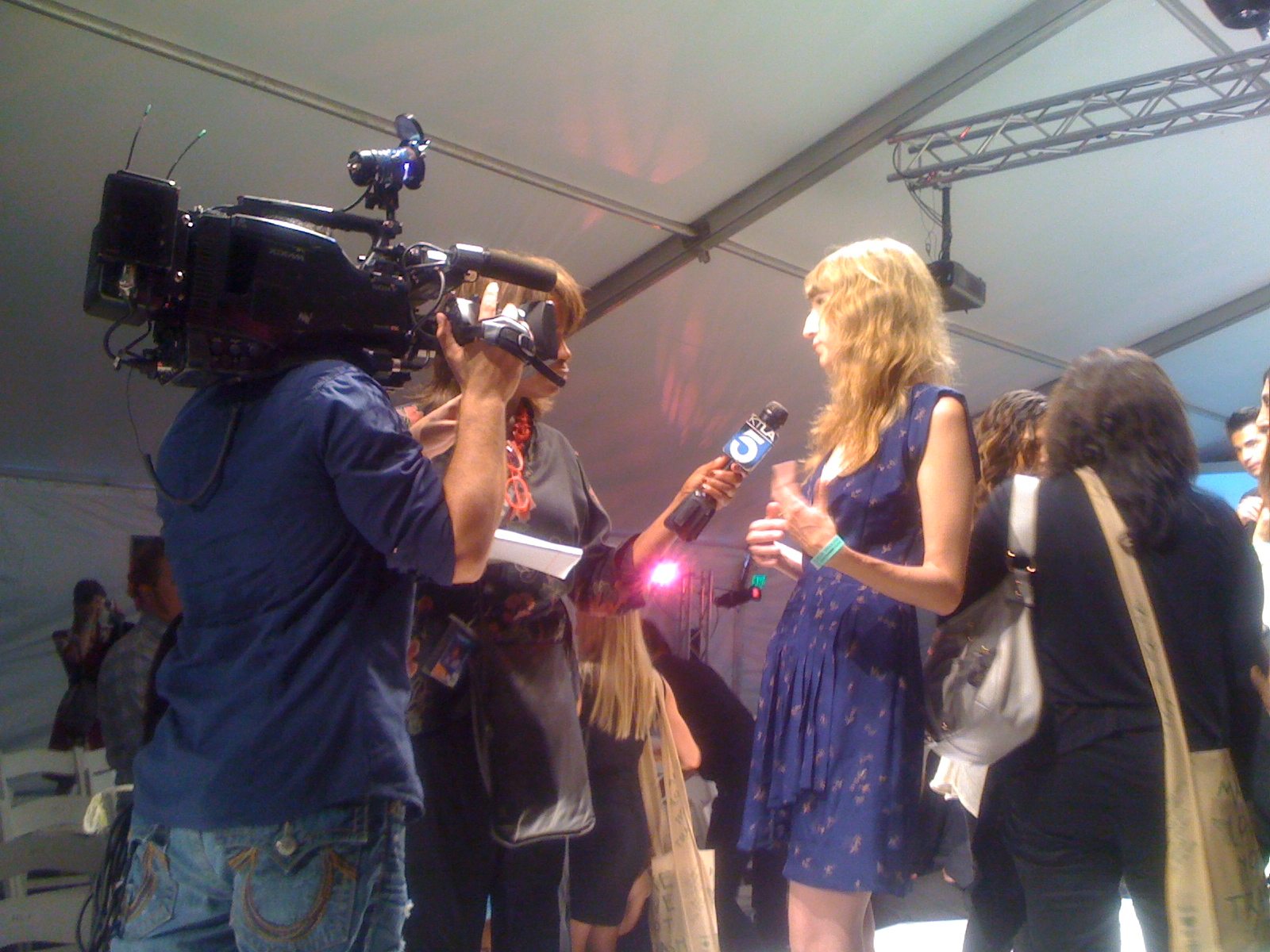
Green Youth Movement at Los Angeles Fashion Week 2010
Kristinit at the Green Youth Movement Showcase at Los Angeles Fashion Week 2010
By Shelton Cheeks, LuxEco Editorial Assistant and Fashion Stylist
On October 16th, Los Angeles Fashion Week forged its alliance with the Green (R)evolution by featuring a showcase of designers, produced in part by  The Green Youth Movement, or otherwise known as GYM. This organization, headed by the beautiful Chole Mills and Vice President Ema Gersh, is  600 members strong nationwide.  They are dedicated to educating the younger generation about environmental awareness, promoting common sense approaches to adapt an eco-friendly lifestyle and participating in events much like LA Fashion Week to amplify their message.
The former president and founder of GYM Ally Maize was not able to attend fashion week because she just recently enrolled at Emory University in Atlanta, Georgia. Which is known as one of the greenest colleges in the states. I did get the chance to sit down with Ally’s mom, Rochelle Maize in her absence. Rochelle gave me a more in depth breakdown of what GYM has accomplished and what they see for the future. Anyone that talks to Rochelle can see the passion in her eyes about this movement her daughter Ally has become dedicated to. This is far from a hobby for Ally and her dream team, this is something real.

The Ladies of the Green Youth Movement, Chloe Mills on the left
I have to admit I was a little nervous meeting Rochelle in one of the most famous zip codes in the world, 90210. I wasn’t sure what to expect. But I got a chance to meet Rochelle, Megan Smith and Bonnie Rejaei. Two other representatives for the Green Youth Movement that have dedicated much of their personal time to promote the organization. These ladies were some of the most down to earth individuals that I have ever met. We got a chance to connect on a personal level. We laughed and talked about food, me growing up in Texas and how a bad pair of bad shoes can ruin any outfit (which the ladies strongly agreed.) Most importantly, the conversation always resorted back to the main purpose of my visit- How to better educate the public on living a more eco-friendly lifestyle.
Being a fashion stylist, I have attended my fair share of fashion shows, but the atmosphere that GYM created for this event had an inviting and welcoming ambiance (a rarity in fashion!) Even my Managing Editor Bethany Colson commented on the refreshing lack of attitudes and egos. People were more involved and dedication to the spirit of GYM and proving that you don’t have to sacrifice your style to go green.
GYM’s LA Fashion Week was strong and cohesive. Four designers, who were talented enough to be mistaken for some of the heavy hitters in the business, hit the runway with eco-friendly collections. These designers had something different to offer and you can see they are all fine tuning their eco-niche in the world of fashion.

Kristinit at LA Fashion Week 2010
KeoK’jay, very distinct name by the way was one of the first collections to showcase. The off the shoulder number with the crisscross backing that blazed down the runway in pearl white and then in a soft gray, was a great way to start off the show. I think my co-stylist Dow has already put in an order to purchase this particular piece. I’m wondering if Keokjay will be able to keep up with the vast amount of orders for that particular dress.
Kristinit was another line that hit the runway. I got the chance to view her website a few weeks before the show and I was anxious to see what was to come. I like to call them feminine and fun pieces. The turquoise mini-which is one of my favorite colors by the way-is a sexy and flirty number for any age group, young or mature.
Jonano, owned and designed by Bonnie Siefers had the crowd wanting more. Her collection was spectacular and the navy bamboo velvet dress she was wearing is a must have for any woman’s personal collection (but you will have to

Emily Factor at LA Fashion Week 2010
wait as she informed us it would be in her upcoming fall line up.)
Last but so not least, Emily Factor present her line, one of the most anticipated collections to be featured at LA Fashion Week. I got the chance to meet her publicist Serene Cicora, who was a total sweetheart and very inviting in letting me meet with her client. I personally told Emily, “ Im not crazy about patterns, but the way you do patterns is oh-so-right.” Her line will be featured in New York this up coming week as well. I’m excited to see Emily Factor’ star quality rise in the fashion world and I’m not just saying that because she said I have gorgeous eyes. Thanks Em!
To see so many talented individuals come together to promote an initiative that will help people adopt a more healthy lifestyle touches my heart. Paired with the fact they are all doing it with such style and grace, makes it even more worth while. Like Rochelle Miaze told me, we are all in this together and only together will be able to make a difference-not only here in the U.S but the world. Thank you for allowing me and my organization, LuxEco, be apart of something so meaningful and powerful. I’m excited to see what the future holds for GYM and the Green (R)evolution.

Green Youth Movement presents Eco Fashion at the Los Angeles Fashion Week 2010

Green Youth Movement presents Eco Fashion at the Los Angeles Fashion Week 2010
Picture 1 of 7
Green Youth Movement presents Eco Fashion at the Los Angeles Fashion Week 2010

Monday, October 25, 2010

Richard Maize: In Recession, Why Banks Are Perceived As "Bad Guys"?

Richard Maize: In Recession, Why Banks Are Perceived As "Bad Guys"?


Richard Maize: "The banks have done nothing wrong
as they help thousands of Americans realize their dreams."


"Mr. Taylor has a nice family," says Richard Maize, one of the world's most successful businessmen and a respected philanthropist.  

"He has a wife of 15 years and 3 kids all of school ages. In 2006, Mr. and Mrs Taylor had found the house of their dreams within the area and approximate price rage they were looking for. This could have been anywhere from Los Angeles, Chicago or New York to Detroit, Houston or Atlanta." 

"They consulted with a mortgage broker that the real estate agent recommended to them.  A mortgage broker who was very competent with many years of experience.  He went over the available programs that the lenders offered. Very attractive to the borrower.  Mrs. Taylor really wanted the house for her kids and would enjoy the great school system for the neighborhood.  Mr. Taylor was willing to work the grave shift on a few days a week to continue their life style and pay for this new higher expense."

Richard Maize, who became the leading mortgage banker in the US, continues: "The Taylors, like millions of other families in America, borrowed the 10% down payment and got into the house of their dreams.  Both the mortgage broker and real estate agent reassured Mr. Taylor reminding him that the real estate market is hot and will most likely continue increasing so that not only will they be living in their dream house but will be accumulating additional wealth as well.  The Taylors purchased the house and were elated.  They were so grateful, they sent fresh baked cookies to the lender and all of the brokers that were involved." 
 
"Lets zero in on what the bank did so far;  they helped the Taylors get into the house they desperately wanted," says Maize. "The kids got into the fine school system and the Taylors met a group of new friends from the neighborhood.  The bank did exactly was asked of them.  The Bank loaned the Taylors the money to buy their house."
 
"The only thing they did they perhaps should not have done is offer borrowers like the Taylors with good credit a loan whereby if they didn't offer a "no income qualifying" loan, their income would likely not qualify the Taylors to purchase the home.  Is this act really predatory lending?" 
 
Richard Maize says: "Now let's go fast forward".
 
"The economy crashes affecting almost every industry from automotive, real estate and food to travel, steel and construction. Mr. Taylor loses his second employment position which makes this very difficult for him to continue their obligation to the bank to make their home mortgage payments.  On top of that, the value of the real estate property is now lower than the loan balance."  

"What do the Taylors do now?" asks Maize.  "They have a tremendous amount of pressure. They go to a lawyer who calls "bloody murder" of either a technical issue with the loan documents or that the bank had no business loaning money to borrowers who really did not have the means to make the payments for a long period of time and the lenders should take the majority of the downfall because they in fact made this bank real estate loan."
 
"The lender will now either discount the amount owed and take a sizable loss or have to take back their collateral in a foreclosure sale which now is being halted by the government so that the banks will take bigger losses by not converting their bad paper into a saleable asset." 
 
Richard Maize concludes: "Was this really a high risk investment for the lender that was making a low risk return of about 5%? The banks, from Bank of America Corp.  J. P. Morgan Chase & Company and Citigroup to Wachovia Corp., Wells Fargo & Company and HSBC North America Inc. were and are being blamed for simply doing what was asked of them by US consumers and the real estate community as a whole. Helping Americans to realize their dreams and achieving a better quality of life."

The Rochelle and Richard Maize Foundation is a philanthropic organization that supports and contributes volunteer and financial resources to causes locally in the community and worldwide by supporting meaningful programs focusing on art, culture, family services and health care that work to help people live more fulfilling lives.

Richard Maize has generously supported organizations and causes both locally and worldwide including the American Cancer Society, Vista Del Mar Child and Family Services, Hurricane Katrina, Los Angeles Police Foundation, humanitarian causes in Israel and Haiti, and the Cedars Sinai Board of Governors.

 
Richard Maize and his wife, Rochelle Maize, are longtime benefactors of the American Cancer Society, among many other organizations, and Richard Maize has been recognized for his efforts on behalf of more than a dozen charitable groups and community projects.

The Rochelle and Richard Maize Foundation supports an extraordinary number of foundations, organizations, and non-profit groups. The Rochelle and Richard Maize Foundation is a philanthropic organization that supports and contributes volunteer and financial resources to community and global causes by supporting programs focusing on art, culture, family services, and healthcare. The Rochelle and Richard Maize Foundation’s efforts also help people with cancer and those who care for them lead live more fulfilling lives.
 

Monday, October 18, 2010

Richard Maize Advises US Middle-Aged On How to Survive the Recession

Richard Maize Advises US Middle-Aged On How to Survive the Recession


Los Angeles, California (UnitedStatesNewsAgency) October 18, 2010 ---- In an interview with the United States News Agency, Richard Maize provides advice to middle class Americans on how to survive the present recession.


"The downturn in the US economy has affected almost everyone in the country and most throughout the world," says Richard Maize, one of the world's most successful businessmen and a respected philanthropist.  


A historic record financial collapse, this recession from Los Angeles, Chicago, Houston and New York to Boston, Miami, Kansas City and Atlanta has been more severe than any since the Great Depression. At the current rate of job creation, the US would need at least nine more years to recapture the jobs lost during this recession.


"The group that will have the hardest time recovering providing the economy recovers as we all anticipate, is the middle aged.  Many, who were once considered middle class had been hit with a set of circumstances they had not been faced with since the time they started their lives in the work force.   What do they do?  How did this happen?  Could it have been avoided?" asks Maize.

"I want to tell you three real life stories of three men in different careers about the same age sharing one thing in common; all either out or work or their occupation had minimized to greatly reduce their income.  Two of them are struggling and one is doing well," says Richard Maize, who was for many years the leading mortgage banker in the US.

"Mr. Jones (obviously a fictitious name but real events) had a very good life.  He owned a modest home in southern California, went to dinner at elegant restaurants three days a week with his wife.  He had many friends and two very expensive cars he paid for (either financed or cash, not certain).   His business was reduced by way of technology and the downturn of the economy.  Fast forward two years. He lost his house to the bank, he is about to lose his apartment and has burnt bridges with his long time friends by borrowing money from them that he knew he would never return and now is drinking daily to avoid dealing with the pressure of being homeless and having one of his last allies leave him - his wife.  Now what?  He is 60 years old living the good life most of his adult life and now wondering where is next meal is coming from," says Maize. 

"Mr. Smith was in the financial field.  He never saved money nor ever grew up with money," says Richard Maize.  "He was always lacking motivation.  He is extremely smart (book smart).  During the "hay day" in the finance business, he was making between 125 -150 thousand dollars a year.  Perhaps enough for him to pay taxes and live higher than he was used to living in the past.  With the financial collapse, he was unable to even make a living.  Again, no savings to live off.   What does he do?  He is living with a long term girlfriend who is working and making a modest income.  How long will she be able to or want to support him?  Not long is the answer.  He took a job that is much less in income and much less than he is capable of doing.  Just to bring in some income.  That is known as "frictional unemployment".  Being employed but settling for a job that is less than one is trained for - i.e. - an attorney settling for a job as a manager of a grocery store.  Not a success story for him either, but not a complete disaster either."

Maize continues: "Now, here is number three. He lost his business by way of poor choices.  He had large savings that were used to pay for legal bills and lawsuits that are sometimes the result of owning a business and losing a business.  This guy is familiar with being a winner.  He is used to acting well under pressure.  He has good logic and good sense.   Many wealthy people had made most of their wealth during the bad economic times.  Great opportunities in bad times.  'Use your head and don't panic' are words that be uttered by this third guy."


"He bought an investment group and they are buying distressed assets from individuals and banks.  Then reselling.  This guy is buying foreclosures on the court steps at lower than market.  He is fixing up the properties and selling them for a reasonable gain.  The 'trophy' properties, they are keeping and renting them out for a cash flow.  He said there are tons of opportunities in this market.  'Are you kidding?' he said to me.  "I am making more now than during the time when I had more business".  By the way, the third guy owned a few retail stores that produced a very nice income for himself and his family.  He also had a few small shopping centers that did very well for him.  Lost them all," says Maize.

Maize asks: "What does Mr. Jones and Mr. Smith do?  How do they get out of their situations?" 


Maize states: "Jones and Smith first of all have to sit back and look from the sky down and not to panic.  They should look at the global markets and see where there a need.   We all recognize the fact that there basics need to taken care of.  It is debilitating not to have work and somewhere to go each and every day.  I perfectly understand that."


"Here is what they should do," advises Maize.  "First off, write down on a piece of paper all their strengths.  I mean all of them.  From the most sophisticated to the most menial.   Then, write down all of their interests that perhaps up to now they could not do based upon the pressures of  their current circumstance.  This could be a new lease on life."


Richard Maize adds: "Having confidence is a very important ingredient as to taking the next step. This one single element holds true today and will always remain a valid move upward."


"At middle age recognizing that you have very little savings and without work is a very humbling experience and can weigh heavily on your own self worth.  Take out that pad of paper again.  Ask yourself why is your value and experience more valuable than a college graduate with little or no experience?  What can you add to your industry that is unique and more productive than almost anyone else?," says Maize.   


"You have to believe in yourself.  Think big and global.  Your best ally is you and your notes about you and the business industry that you either want or previously involved with.  You might have to modernize your thinking in this fast moving, Internet Facebook Twitter world we live in.  If you are having trouble doing that on your own, take an extension class about your industry.  This will often stimulate your thought of where you can fit in and make a difference.  Think positive thoughts and go out and improve your ideas."


Maize concludes:  "Make a plan and move forward." 


The Rochelle and Richard Maize Foundation is a philanthropic organization that supports and contributes volunteer and financial resources to local and worldwide causes. By providing financial support to focus on art, culture, family services and healthcare, the Rochelle and Richard Maize Foundation helps ensure that those in need and their families can live more fulfilling lives.


The Rochelle and Richard Maize Foundation generously supports foundations and causes such as the Crohn’s and Colitis Foundation of America, the American Cancer Society, Vista Del Mar Child and Family Services, Hurricane Katrina, Cedars-Sinai Medical Center and Board of Governors,  and the Jewish Maccabiah games, one of the world’s largest annual summer  sporting competitions for Jewish youth. “Team L.A.,” supported by the Rochelle and Richard Maize Foundation, celebrated silver and bronze medal wins at the 26th annual Maccabiah games held in Detroit in 2008. The week-long sporting event included teen athletes from the United States, Canada, Great Britain, Hungary, Israel, Mexico and Venezuela.